

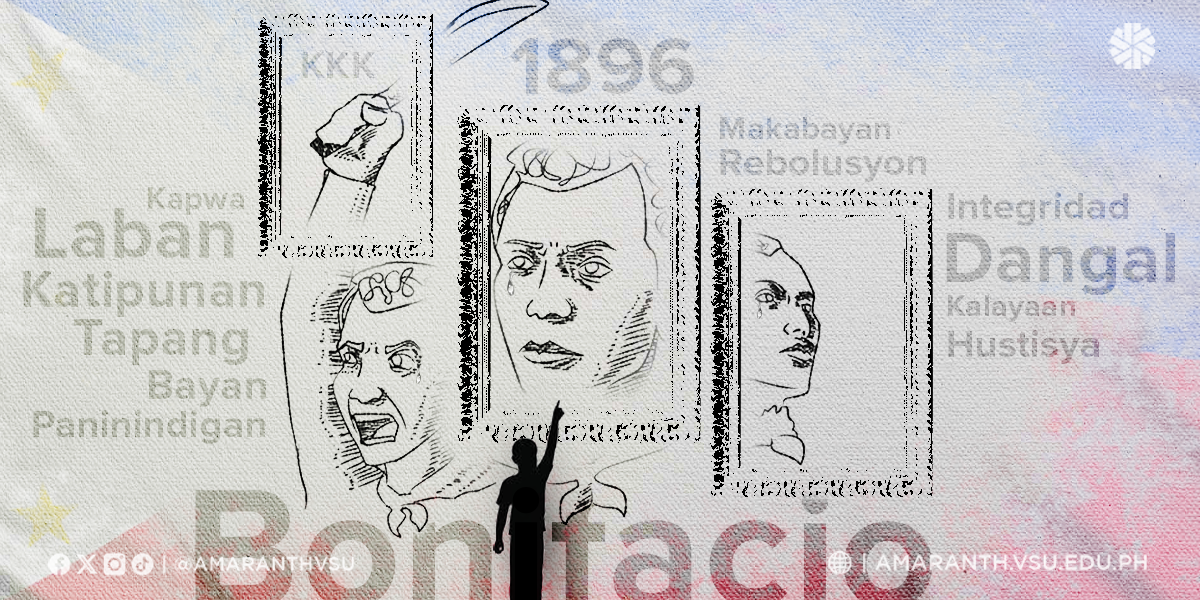
Patriotism is easy to claim in a state of peace, but what if loving one’s country meant walking straight into the fire of peril for the sake of justice and freedom—with no guarantee that the nation would ever gain independence? Andrés Bonifacio answered that question with his blood and his life, carrying an unwavering devotion to the Philippines even beyond death.
On this 30th of November, the Philippines celebrates the birthday of Andrés Bonifacio y de Castro, also known as the “Father of the Philippine Revolution,” honoring his bravery, loyalty, and undying love for his homeland. He was a man who not only questioned the oppressive Spanish rule but also sought to change the unjust system by revolting alongside his countrymen. Some historians claim that he was the first unofficial president of the nation because he spearheaded the Kataastaasan, Kagalanggalangang Katipunan ng mga Anak ng Bayan (KKK), also known as the “Katipunan”—the revolutionary group that fought to secure independence from the Spanish colonizers.
In commemorating his courage, we must reaffirm the legacy he left behind—by continuing to uphold the resistance he embodied in order to advance a nation built on devotion to God, committed to humanity, caring for nature, and loyal to one's country, just as he envisioned more than a century ago.
The Making of a Revolutionary
Before becoming the face of a revolutionary movement, Andrés Bonifacio endured hardships, loss, and countless challenges at a young age—experiences that forged his path as one of the most influential heroes of the Philippines. He was born in Tondo, Manila, on November 30, 1863, the eldest of six children of Catalina de Castro, a Spanish mestiza, and Santiago Bonifacio, an alkalde of Tondo.
His family didn’t have much, and whatever little they had vanished quickly. After being orphaned at 14, he was left to shoulder the responsibility of raising his younger siblings. Though he grew up in a struggling household and had a half-Spanish mother, a series of economic setbacks and illnesses pushed the family into hardship, making survival increasingly difficult.
This forced Bonifacio to abandon formal schooling and work full-time, taking on whatever jobs he could find—from selling canes and paper fans to laboring as a bodeguero, and even working as a messenger and clerk—all to help his family survive. He also had a creative outlet, working as a part-time actor in moro-moro plays, often portraying the folk hero Bernardo Carpio.
Yet the world did not leave him empty-handed. His thirst for knowledge endured. Though deprived of formal education, he became a self-taught man, teaching himself literacy and fluency in Spanish and Tagalog, as well as some English, while working for British and German trading firms. As an avid reader, he devoured works on the French Revolution, law, biographies of U.S. presidents, and novels by authors such as Victor Hugo. He read articles from the official newspaper of the Filipino Propaganda Movement, led by Jose Rizal, La Solidaridad, as well as two of Rizal’s most influential books: Noli me Tangere and El Filibusterismo.
Bonifacio looked up to Rizal as a symbol of freedom for the Philippines and its reform. On July 3, 1892, Bonifacio attended a meeting that would shape his future and bring him into contact with José Rizal. He became one of the founding members of La Liga Filipina, a civil association that advocated for political reforms under Spanish rule.
Brotherhood in the Shadows: The Katipunan
Bonifacio harbored a strong desire to challenge Spanish rule in the Philippines. The deportation of José Rizal in July 1892 became a turning point, and La Liga Filipina disbanded—inspiring Bonifacio and others to form the Katipunan, a secret revolutionary society dedicated to achieving independence and uniting Filipinos in the fight against colonial oppression. The organization officially began on July 7, 1892, marking the start of its clandestine preparations for revolution.
In 1895, Bonifacio became president of the Katipunan, which began as a small movement but expanded beyond Tondo, Manila, reaching various provinces and social classes to strengthen their brotherhood. They held rituals—dangerous practices that could risk exposure—yet they persisted. Their unity and courage became a beacon for the oppressed.
Members of the Katipunan tore their cedulas as a symbolic act of rebellion against Spain. This act sparked momentum, becoming an open sign of resistance that set the stage for the First Philippine Revolution in August 1896.
The Revolution Takes Action
Despite their secrecy, a Spanish friar eventually discovered the Katipunan’s activities through a form of betrayal by a Katipunero, Teodoro Patiño. This alerted the authorities to the revolutionary threat. Yet the “Anakbayan” spirit endured. Bonifacio rallied ordinary Filipinos—workers, peasants, and common men—to join the fight for independence.
On August 23, 1896, he led the Katipuneros in the historic Ang Sigaw ng Pugad Lawin. Though poorly armed, they risked their lives for the greater good. Under Bonifacio’s leadership, the flame of revolution blazed ever brighter across the archipelago of the Philippines.
While the leadership of Bonifacio was evident, the tension between the Elite Ilustrados and Bonifacio, who was the man of the masses, arose. Many Ilustrados, especially Emilio Aguinaldo, questioned his leadership. Illustrados wanted reform over revolution; they preferred negotiation with the Spaniards rather than a bloody revolution, but Bonifacio was committed to direct action towards the injustices that were happening back then. He always took action to empower ordinary Filipinos to fight for freedom, making him the Supremo of the Katipunan.
This growing tension between the social elites and Bonifacio’s mass-based revolution came to a head on March 22, 1897, when leaders from different factions in Cavite gathered at Tejeros to form a unified revolutionary government. The meeting exposed the apparent social and ideological rift. Although elected as the Katipunan's Supremo, Bonifacio's authority was openly contested by the illustrados. Conflicts erupted, especially with Bonifacio, which affected his role as the revolutionary leader and his fate.
The Legacy He Left, and the Legacy We Must Embody
On May 10, 1897, at Maragondon, Cavite, Andres Bonifacio, alongside his brother, Procopio Bonifacio, was executed by a military firing squad under the orders of the Council of War. Both Bonifacio brothers were found guilty of sedition and treason against the revolutionary government—but their legacy lives on.
The brothers met their tragic fate—cut down by the very revolution they ignited with their blood, sweat, and tears. They were not able to witness the day of our independence they sought to secure from the Spanish colonizers. Even in death, they carried their undying love for their homeland, and Andres Bonifacio wasn’t able to finish what he started.
Bonifacio’s history of taking on countless jobs while single-handedly establishing an education for himself is not only a message that hard work persists, but rather, that the next supremo could very well exist between the fields of rice crops, in the neglected slums, and on the hands black with dirt. Bonifacio’s self-taught education was one thing, but his experience with the common people who waded through their lives drenched in sweat was a whole other thing. It was the very reason he was able to plant the revolution.
In everything we do, we must embody the very thing that Bonifacio had since the very beginning, and that is the persistence to learn, to dedicate our capabilities to what we can do to help and improve society for the better, and to find hope in times of peril—because a true leader will always be devoted for the masses and rise for the people to make actions to defend his homeland.
Andres Bonifacio’s devotion to the Philippines back then should empower each one of us to also demand our rights and freedom as Filipinos, even if that means going beyond the line. Today, Bonifacio is kept alive in history because he is the face of a true leader who takes action, he was the voice of the masses, he rallied and fought with Filipino men who had one goal—and that is to defend what is rightfully ours from the start.
The legacy he left with him offers so much to the modern Filipino. There is value in standing up for your country. That, despite the difficulty in navigating the smoke-filled streets and going through the course of a 9-5 everyday, each one of us should still refuse to be complacent. The system weaved around all of us is discouraging, and it is easy to surrender to it instead. But every November 30, we are reminded that the pursuit of your country’s freedom is ultimately worthwhile. This decades-long fight has spent way too much blood, sweat, and tears, but the prosperity that blooms from it gently washes it all away.