

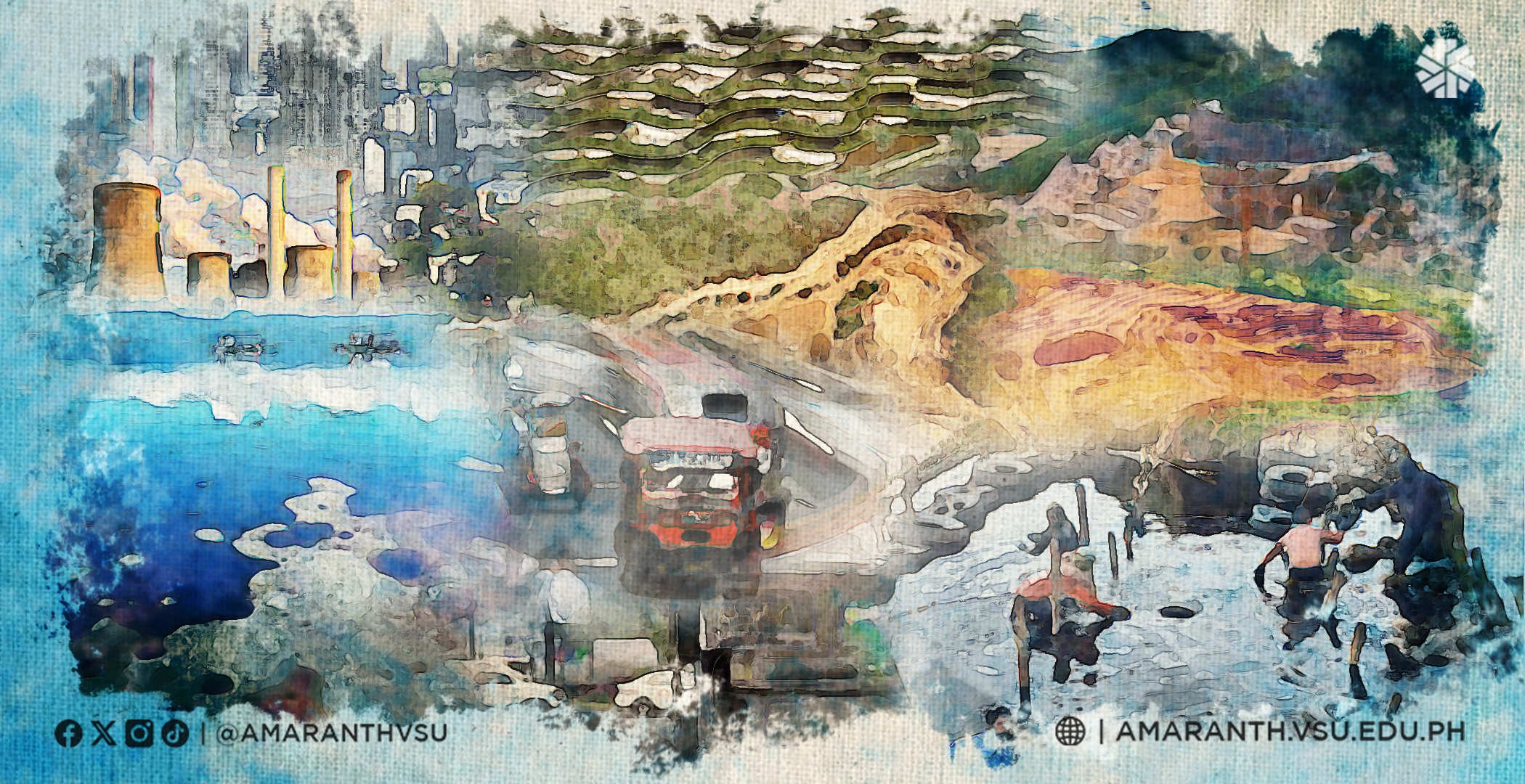
In the past few months, the country has once again found itself battling heavy storms, destructive typhoons, and floods that swallowed entire communities—disasters that are growing stronger and more alarming each year. Across social media, countless posts and videos have shown the same distressing pattern: people struggling through rising waters, homes destroyed in minutes, and communities expressing frustration over environmental damage that has made these disasters far worse. These scenes, shared and reshared online, reveal a collective fear that the environment is reaching its limit.
These reactions raise an important question: How much more damage must our environment endure before we finally take responsibility?
This November, the National Environmental Awareness Month reminds us that these issues are not just incidents but urgent warnings. The Philippines—rich in biodiversity yet extremely vulnerable—is facing environmental problems intensified by human actions, from oil spills contaminating our waters, forests cleared for development, mining operations damaging entire communities, mining operations damaging local livelihoods and communitiesand pollution suffocating our cities— all direct results of human activity. It is deeply concerning that, despite our country’s rich biodiversity, human actions continue to push our environment to its limits, leaving communities vulnerable and ecosystems under severe threat.
So, what is actually happening to our environment?
In Our Oceans
In late October 2025, around October 24th to 26th at Negros Oriental, Bais City — the local government of Bais City has declared a state of calamity following a massive wastewater spill from Universal Robina Corporation (URC) distillery, specifically ethanol, a harmful chemical that turned the Manjuyod White Sand Bar seawater a dark red. This spill has also affected the Tañon Strait Protected Seascape (TSPS),which is particularly concerning and dangerous, as it is one of the largest marine protected areas in the Philippines. The incident threatens the lives and habitats of diverse marine species and contaminates vital sources of food and livelihood, endangering the significant fishing grounds relied upon by local communities. Pathogens, heavy metals, and toxic chemicals in the spill also pose serious risks to both human and animal health, reducing the species diversity, and unsafe seafood for consumption.
Read More:
In our Lands and In our Forests
April 17, 2024 at Homonhon Island —For 41 years, since 1983, Homonhon island has been mined. The continuous mining of the island poses a serious threat to both the environment and local communities. Open-pit extraction of nickel and chromite—minerals used in steel production, metal hardening, and exports to China—has led to severe deforestation, stripping the island of trees and destabilizing the land. Dust from mining operations spreads into nearby communities, making children sick, forcing residents to wear masks, and even disrupting school classes due to frequent illnesses. Calamansi farms in Barangay Bitaugan, a vital source of livelihood, have been covered in dust, affecting their growth. Meanwhile, mud and mining runoff flow into the sea, contaminating fishing areas and reducing marine life, putting the island’s main sources of food and income at risk.
Out of the eight barangays on the island, only three remain untouched by mining. Many residents are now openly expressing frustration and joining protests to stop the operations, while others continue to tolerate the activity because of the jobs it provides. Still, the long-term damage to health, livelihoods, and the fragile ecosystem remains deeply concerning and undeniably dangerous.
Three companies are currently linked to these operations—Emir Mineral Resources Corporation, Nickelace Incorporated, and Chromiteking Incorporated. While Mt. Sinai Mining Exploration & Development Corp. is present on the island but not actively operating. Although one company, the Emir Mineral Resources Corporation, has voluntarily halted its activities following community complaints, uncertainty persists: how long will the remaining resources last, and what will be left of Homonhon once the mining finally stops?
Watch for more details: https://youtu.be/nVAcjegkiaY?si=cLUs8jnNNfsKnATe
November 4, 2025 at Cebu City — Celebrity engineer Slater Young’s hillside development, Monterrazas de Cebu, has drawn renewed criticism after Typhoon Tino which caused flooding, endangering nearby communities due to the clearing of trees and cutting into steep slopes which weakened the hillside’s stability and led to severe soil erosion, reducing the land’s ability to absorb rain. As a result, heavy water rushed down the hill during the typhoon, leading to the dangerous floods that affected residents in Barangay Guadalupe below. In response, the Department of Environment and Natural Resources (DENR) has launched a joint inspection, investigation and assessment of the project amid growing concerns over environmental damage and reports of flooding and soil movement.
More info: https://cebudailynews.inquirer.net/669244/the-monterrazas-de-cebu-chronicles
In the Air we Breathe
Cities in the Philippines — Over the years, the Philippines’ push for industrial growth has gone through many stages, and each one has added to the country’s air quality problems. The rapid rise of factories and the huge number of vehicles—especially in big cities—have released a great amount of harmful smoke and chemicals into the air.
Fossil fuels remain the biggest source of air pollution, and transportation is the leading contributor, with thousands of cars, trucks, and jeepneys running on diesel and gasoline every day. Jeepneys alone make up a large part of these emissions, adding heavily to the dirty air in Manila. Because of this, it puts many Filipinos at greater risk of asthma, bronchitis, and other breathing problems. Children, the elderly, and those with pre-existing conditions are especially vulnerable, making air pollution not just an environmental issue but a pressing public health concern for communities across the country.
Discover more: https://energytracker.asia/air-pollution-in-the-philippines/
Together, these environmental challenges—spills that poison our oceans, mining and deforestation that degrade our lands, and air pollution that threatens our health—highlight the urgent need for stronger protection of our natural resources. If left unaddressed, they not only harm ecosystems and wildlife but also endanger livelihoods, food security, and public health, showing how deeply intertwined the environment is with the well-being of communities across the country. This leads us back to the question: How much more damage must we witness before we act?
The consequences of our actions are all around us, affecting communities, ecosystems, and the health of our planet. Corruption is one of the main reasons why disasters continue to happen and worsen, allowing harmful practices to go unchecked. The harsh truth is clear: we are losing the natural defenses that once protected us, and the longer we wait to act, the greater the devastation will be.
So now we must ask ourselves: If we see the harm, and we understand the risks, what will we choose to do? How long will we stay silent while our environment suffers?
As Viscans—students, future scientists, innovators, agriculturists, educators, and leaders: the responsibility falls on our shoulders too. We study how nature works, how communities survive, and how every action we take impacts the world around us. If anyone can make a meaningful change, it must be us.
The message of Environmental Awareness Month is no longer simply to “care”, but it is to act boldly and urgently. Let us take what we know, use our skills, and raise our voices to protect our communities, restore our environment, and fight for a future that is safe, sustainable, and worth passing on.
Development and progress are as important, but it must never be pursued at the cost of destroying our environment.